
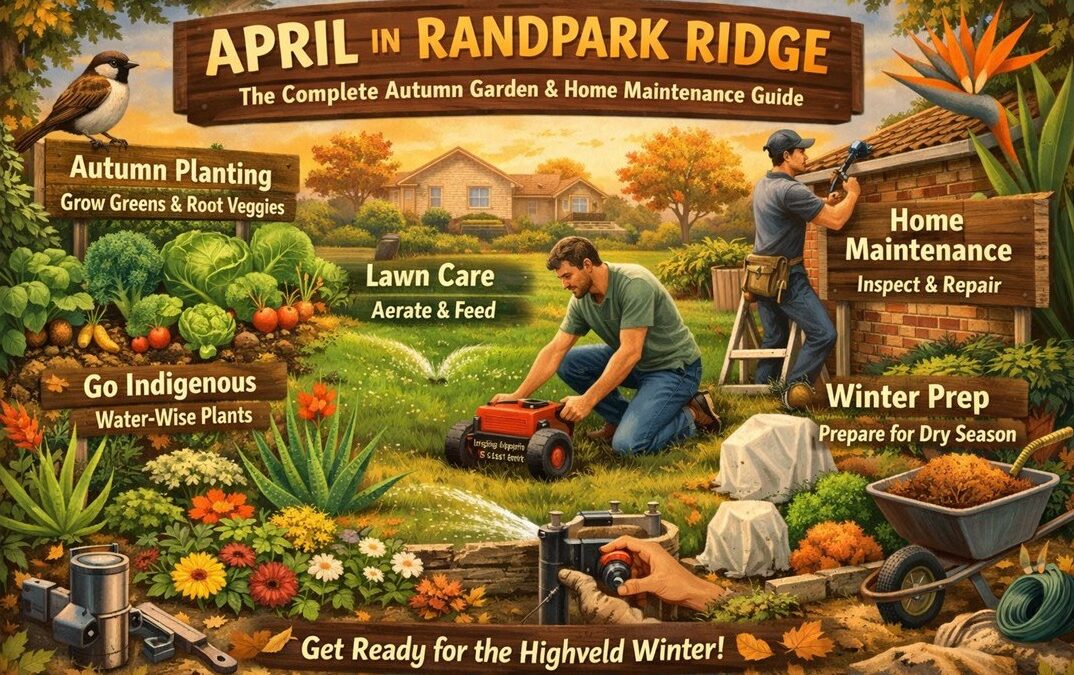
As autumn settles over Randpark Ridge, April brings cooler evenings, dry air, and the last warmth in the soil before winter arrives. This is one of the most important months for proactive homeowners — what you do now will determine how well your garden and property handle the dry Highveld winter.
Here’s your complete April guide combining planting advice, lawn care, indigenous gardening, winter prep, home maintenance, and irrigation servicing.
What to Plant Now in Randpark Ridge
April is ideal for planting because the soil is still warm while temperatures are milder. In addition to spinach, kale, Swiss chard, carrots, beetroot, peas, and lettuce, consider adding:
🥦 Leafy Greens
- Mustard greens – fast-growing, mild-flavoured, great for salads or cooking
- Rocket (Arugula) – thrives in cooler weather, harvest young for best taste
- Cabbage – slow-maturing, perfect for winter harvest
- Collard greens – hardy and frost-tolerant
🥕 Root Vegetables
- Radishes – very quick-growing, great for succession planting
- Turnips – can be harvested as greens or roots
- Parsnips – plant now for a sweet winter crop
- Onions (from sets) – establish before winter for spring harvest
🌿 Herbs
- Coriander (Cilantro) – loves cooler weather, fast-growing
- Parsley – hardy, lasts through winter
- Chives – perennial, perfect for small garden beds
- Thyme & Rosemary – drought-tolerant, low-maintenance
🥔 Other Vegetables
- Broad beans (Fava beans) – nitrogen-fixing, ideal for Highveld soil
- Garlic (cloves) – plant now for winter to early spring harvest
- Leeks – slow-growing, perfect for cooler months
🌸 Quick Tips for April Planting
- Soil prep: Enrich beds with compost or well-rotted manure.
- Succession planting: Sow leafy greens every 2–3 weeks to ensure continuous harvest.
- Mulching: Helps retain soil moisture and keeps roots cool in the remaining warm soil.
- Companion planting: Mix herbs like coriander with leafy greens to reduce pests naturally.
Go Indigenous for a Water-Wise Garden
Indigenous plants are perfectly suited to Highveld conditions. They require less water, attract birds, and tolerate temperature swings.
Consider adding:
Flowering Shrubs & Perennials
- Leonotis leonurus (Wild Dagga) – vibrant orange flowers, attracts birds and butterflies
- Aloe arborescens (Krantz Aloe) – red-orange winter blooms, hardy and drought-tolerant
- Strelitzia reginae (Bird of Paradise) – iconic structure, bird-friendly nectar
- Dierama (Angel’s Fishing Rod) – delicate pink/purple drooping flowers, adds movement
- Salvia africana-caerulea (Blue Sage) – grey-green foliage, long-lasting purple blooms
🌿 Foliage & Structural Plants
- Agapanthus africanus (African Lily) – strong clumping growth, ideal for borders
- Erythrina lysistemon (Coral Tree) – bright red blooms in spring, good shade
- Cycad species – slow-growing, sculptural, almost maintenance-free
- Chasmanthe floribunda – striking orange flowers, attracts sunbirds
🍃 Ground Covers & Low-Maintenance Plants
- Lampranthus spp. (Ice Plants) – succulent ground cover, bright flowers, drought-hardy
- Gazania rigens (Treasure Flower) – spreads easily, bright yellow/orange blooms
- Hermannia depressa – small, low-growing purple flowers, minimal water
🌸 Pollinator & Bird-Friendly Plants
- Callistemon spp. (Bottlebrush) – red blooms, excellent for nectar-feeding birds
- Helichrysum spp. (Everlastings) – grey foliage, drought-tolerant, soft yellow flowers
- Fuchsia spp. (Indigenous hybrid varieties) – attracts sunbirds, delicate flowers
Prepare for the Dry Winter Months
Johannesburg winters are dry, with minimal rainfall. April is the time to conserve moisture.
Essential steps:
- Apply 5–8 cm of mulch around plants
- Water deeply but less frequently
- Inspect irrigation systems for leaks
- Protect frost-sensitive plants in exposed areas
- Mulching now reduces evaporation and protects roots from cold snaps.
🌿 Autumn Lawn Care: Avoid Costly Mistakes
Most Randpark Ridge lawns are Kikuyu, which slows down as temperatures drop.
April lawn checklist:
- Raise mower height slightly
- Apply an autumn fertiliser (low nitrogen)
- Aerate compacted soil
- Repair bare patches early
Avoid heavy feeding late in the season — it encourages weak growth before dormancy.
April Home Maintenance Checklist
Autumn is also the perfect time to check your property after summer storms.
April Home Maintenance Priorities for Randpark Ridge
- Clean gutters and downpipes – prevent blockages from leaves and debris; check for leaks.
- Inspect roof tiles and flashings – repair cracked, loose, or missing tiles before winter rains.
- Check exterior walls for cracks – seal cracks and repaint areas where needed to prevent water ingress.
- Service your pool pump and reduce running time – balance cleaning with energy savings as temperatures drop.
- Seal drafts in windows, doors, and roof spaces – improve energy efficiency and comfort during cooler nights.
- Inspect fences, gates, and boundary walls – repair damage from summer storms or wear and tear.
- Check plumbing for leaks – inspect taps, pipes, and irrigation systems to avoid winter bursts.
- Service borehole or irrigation pumps – ensure pressure is correct and check timers for efficiency.
- Clean outdoor lighting fixtures – replace bulbs and check wiring for safety.
- Trim trees and shrubs near the house – prevent damage from wind and reduce leaves clogging gutters.
- Check chimney or fireplace (if applicable) – clean flues, inspect for damage, and prepare for winter fires.
- Inspect paving and driveways – repair cracks or uneven surfaces to prevent accidents in wet weather.
- Check outdoor taps and hosepipes – prepare for colder nights and prevent freezing or leaks.
- Inspect drainage around the property – ensure water flows away from foundations.
Tip: Doing these tasks in April before winter sets in prevents costly repairs, maintains property value, and ensures a safer, more comfortable home for the season.
Is It Time to Service Your Borehole or Irrigation System?
With Johannesburg’s Highveld winters being dry, April is the perfect month to check your water systems. Regular maintenance now ensures efficiency, prevents costly repairs, and helps you conserve water during winter.
1. Inspect for Leaks
- Check all irrigation lines, pipes, and connections for leaks or cracks.
- Look for soggy patches in the garden that could indicate hidden leaks.
- Repair or replace any damaged sprinkler heads immediately.
2. Test Your Borehole Pump
- Check that the pump starts and stops correctly.
- Listen for unusual noises (grinding or humming can indicate wear).
- Ensure pressure levels are consistent and match your irrigation requirements.
3. Clean Filters and Screens
- Borehole systems often have sand or debris filters; clean these monthly to prevent blockages.
- Irrigation heads can get clogged with sediment or mineral deposits — flush or clean as needed.
4. Adjust Timer Settings
- With cooler autumn temperatures, plants need less water than in summer.
- Reduce watering frequency but water deeply to encourage strong root growth.
- Check that timers and sensors (rain or soil moisture sensors) are working correctly.
5. Winterize Sensitive Components
- Exposed pipes or sprinkler heads can be damaged by frost or cold snaps.
- Insulate exposed irrigation lines if nighttime temperatures drop below 5°C.
- Drain or shut off parts of the system that won’t be used during winter.
6. Inspect Valves and Control Units
- Manually operate valves to ensure they open and close correctly.
- Inspect the main control unit for error codes or outdated settings.
7. Plan Upgrades or Replacements
- April is a good time to identify outdated components or inefficient systems.
- Consider upgrading to drip irrigation, smart controllers, or water-efficient nozzles.
🍁 Why April Matters in Randpark Ridge
April is a transition month — not yet winter, but no longer summer. Gardens are still active, lawns can still recover, and soil temperatures allow new plantings to establish.
By focusing on:
- Smart autumn planting
- Indigenous, water-wise choices
- Lawn preparation
- Home maintenance checks
- Irrigation and borehole servicing
…you’ll enter winter with a resilient, low-maintenance property ready to thrive again in spring.