
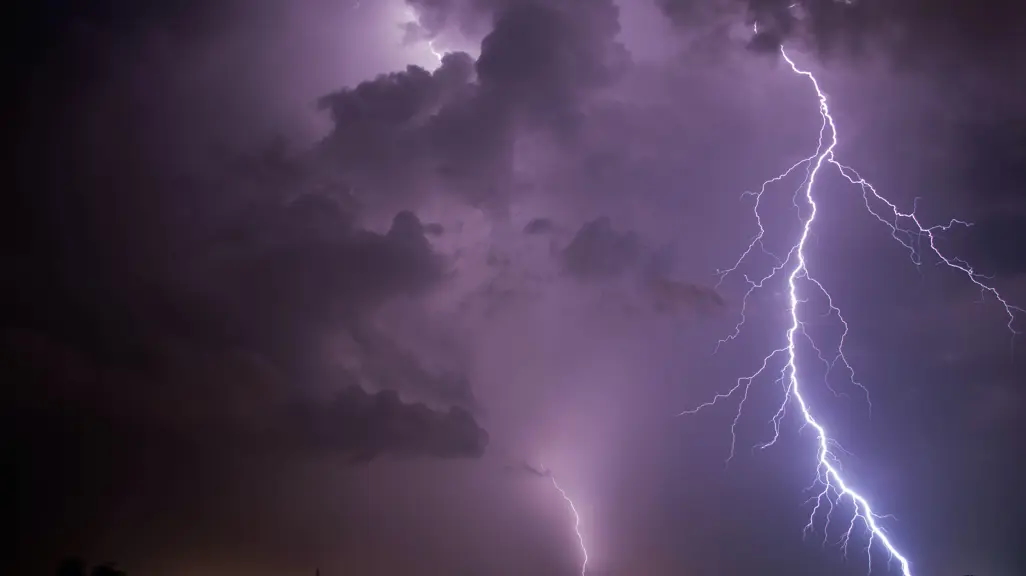
Heavy summer rainfall in Randpark Ridge: the science, the local facts, and what residents can do
If it feels as though this summer has been far wetter than usual, that perception is backed by rainfall data across Johannesburg – including Randpark Ridge. Persistent rain, intense thunderstorms and waterlogged infrastructure have become defining features of the season.
Why Johannesburg is getting so much rain this summer
Summer rain over Gauteng is not random. It is driven by a combination of global climate systems, regional weather patterns and long‑term climate trends.
La Niña and southern Africa rainfall
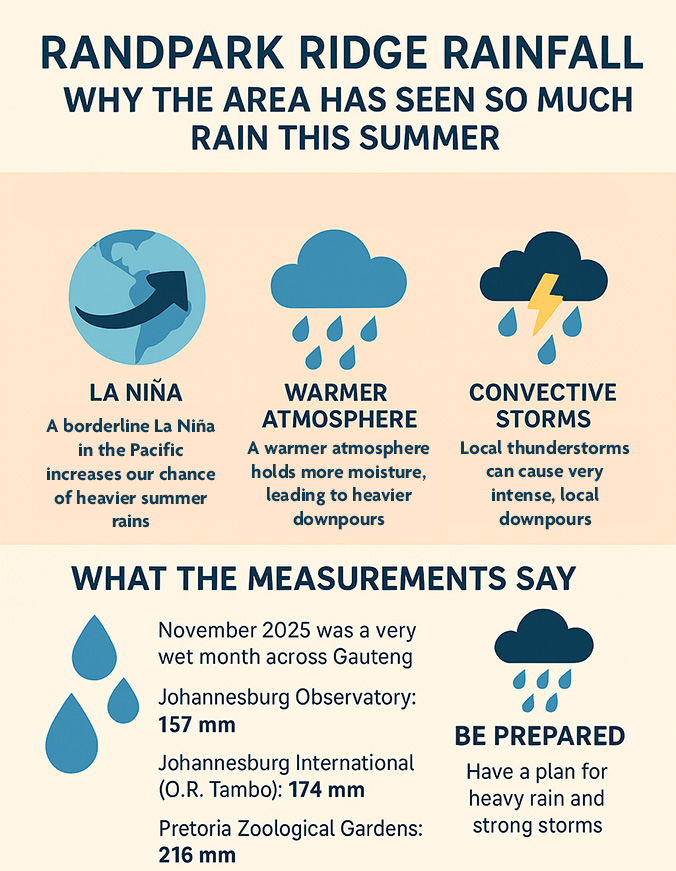
Meteorologists closely watch the El Niño–Southern Oscillation (ENSO) because it strongly influences rainfall across southern Africa. During La Niña phases, summer rainfall over much of South Africa, including Gauteng, is more likely to be above average.
Current climate assessments indicate borderline to weak La Niña conditions, which favour more frequent rain events and longer wet spells during the December to February period. Even a weak La Niña can significantly increase rainfall totals when combined with local thunderstorms.
Warmer air means heavier rain
As global temperatures rise, the atmosphere is able to hold more moisture. When thunderstorms form in this moisture‑rich environment, they release that water rapidly.
This is why Johannesburg storms increasingly produce short, intense downpours rather than gentle, steady rain. Stormwater systems struggle to cope with these concentrated bursts, increasing the risk of localised flooding.
Highveld thunderstorms and local effects
Johannesburg’s position on the Highveld makes it prone to strong convective storms in summer. Warm surface temperatures, moist air and unstable atmospheric conditions combine to produce thunderstorms that can be highly localised.
Neighbouring suburbs may experience vastly different rainfall totals from the same storm. In areas like Randpark Ridge, saturated soils, urban paving and ageing drainage infrastructure can amplify the impact.
Climate change as a risk multiplier
While individual storms are weather events, climate change acts as a risk multiplier. Long‑term warming increases the likelihood that wet seasons become exceptionally wet and that heavy rainfall events occur more often.
Recent rainfall figures around Johannesburg
Weather station data from across Gauteng confirms that November rainfall was well above average in many parts of Johannesburg.
Recorded totals include:
-
Johannesburg areas measuring approximately 150–175 mm of rain during November.
-
Several nearby stations exceeding 200 mm for the month.
Johannesburg’s long‑term November average is significantly lower than these figures. Sustained rainfall of this magnitude explains the widespread reports of flooding, fallen trees, wall collapses and road damage seen across the city.
What the rest of summer may bring
Seasonal outlooks suggest that wetter‑than‑normal conditions are likely to persist into mid‑summer. Rainfall will not be continuous, but heavy thunderstorms will remain possible.
Residents should therefore expect:
-
Further intense summer storms.
-
Short periods of very heavy rain.
-
Occasional strong winds, hail and lightning.
Preparedness is key to minimising damage and disruption.
Practical rain and storm safety tips for Randpark Ridge residents
During heavy rain and storms
-
Do not drive through flooded roads; water depth and road damage are difficult to judge.
-
Move vehicles and valuables to higher ground if flooding threatens.
-
Avoid sheltering near trees, boundary walls or power lines during storms.
Home and property preparation
-
Clear gutters, downpipes and storm drains regularly.
-
Check boundary walls and foundations for movement or cracks after prolonged rain.
-
Secure loose roof tiles, garden furniture and refuse bins.
-
Assess large trees and prune or remove those showing instability.
Electrical and personal safety
-
Avoid contact with electrical fittings near standing water.
-
Switch off power if water has entered electrical systems and consult a qualified electrician.
-
Keep emergency lighting, torches and power banks charged.
Community action
-
Check on elderly or vulnerable neighbours after severe weather.
-
Report blocked drains, fallen trees and damaged roads promptly.
-
Share accurate information through official RRA communication channels.
Pulling together as a community
Randpark Ridge is most resilient when residents act together. Heavy summer rainfall is likely to remain part of Johannesburg’s climate reality, but proactive maintenance, informed decision‑making and neighbourly support significantly reduce risk.
Thank you to all residents who continue to report issues, assist neighbours and help keep our suburb safe.